When the Road Itself Is the Hazard: Holding Government Entities Accountable for Dangerous Roadway Conditions
SAN DIEGO, Aug. 21, 2026
Press Release Disclaimer: This is a press release distributed through the XPR Media network. It has not been independently verified by our newsroom.
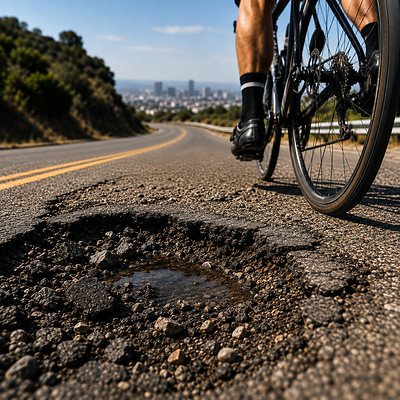

When the Road Itself Is the Hazard: Holding Government Entities Accountable for Dangerous Roadway Conditions
PR Newswire
SAN DIEGO, Aug. 21, 2026
By Allen Leisorek, Trial Attorney, Gomez Trial Attorneys
SAN DIEGO, Aug. 21, 2026 /PRNewswire/ — As a personal injury attorney and an avid cyclist, this is an issue I see from two very different perspectives. I spend plenty of time riding California’s roads myself, and I also represent people who have been seriously injured on them.
When you ride regularly, you quickly realize how something that seems minor to a driver can be a serious hazard for a cyclist. A pothole, broken pavement, uneven grate, crumbling shoulder or poorly maintained bike lane may barely register when you’re driving a car. On a bicycle, it can send you over the handlebars in an instant.
I’ve seen the kinds of injuries that can result. Broken bones, head injuries, severe road rash and other injuries can turn an ordinary ride into something that affects a person for months or even years.
One question cyclist understandably have after a crash caused by a road condition is whether anyone can actually be held responsible.
Sometimes, the answer is yes.
The important thing to understand is that these cases can be very different from a typical personal injury case, particularly when the road or bike lane is owned or maintained by a government agency.
Most public roads, bike lanes and paths in California are maintained by a city, county, Caltrans or another government entity. If a dangerous condition on public property causes an injury, California law provides a potential path for holding the responsible agency accountable. But there are additional rules and deadlines that apply.
One of the biggest differences is time.
Under California’s Government Claims Act, someone seeking damages from a public entity generally must first submit an administrative claim to the appropriate agency before filing a lawsuit. For personal injury claims, that claim generally must be presented within six months of the injury.
That is a much shorter period than many people expect. A cyclist may understandably be focused on surgery, medical appointments, getting back to work or simply recovering and have no idea that an important legal deadline is already running out.
That is why I always stress the importance of looking into your options sooner rather than later.
There is also more to one of these cases than simply proving that a pothole or other roadway defect existed.
California Government Code section 835 addresses injuries caused by a dangerous condition of public property. Generally, a person must establish that the property was in a dangerous condition, that the condition caused the injury and that it created a reasonably foreseeable risk of the type of injury that occurred. There also has to be a basis for holding the public entity responsible, such as the condition being created by a public employee’s negligent or wrongful act or the agency having sufficient notice of the dangerous condition to act.
That question of notice can become a major part of the case.
How long had the pothole been there? Had other people complained about it? Were there previous incidents? Did residents submit reports? Were repairs scheduled but never completed?
Records such as prior complaints, maintenance documents, photographs, repair histories and 311 reports can become important evidence.
Government agencies also have defenses available to them. One we regularly encounter is known as design immunity. Under certain circumstances, a public entity may argue that a roadway or bike lane was built according to an approved design and that the agency is therefore protected from liability.
These issues can become complicated quickly, particularly when a roadway has changed over time or the conditions that exist today are different from those contemplated when the original design was approved.
A cyclist’s own actions can also become part of the case. California follows comparative fault rules, so issues such as speed, positioning on the road and visibility may be considered when determining responsibility. Being partially responsible, however, does not necessarily mean a cyclist cannot recover damages. Any recovery may instead be reduced based on that person’s percentage of fault.
If you are involved in a bicycle crash caused by a roadway condition, one of the most useful things you can do is document what happened as soon as you safely can.
Take photographs and videos of the pothole, crack or other defect. Get wide shots showing where it is located and closer photographs showing its size and depth. Road conditions can change quickly. A dangerous pothole that exists today could be repaired next week, and once that happens, some of the best evidence of what caused the crash may be gone.
Keep your bicycle, helmet and damaged equipment as well. Seek appropriate medical treatment and keep track of what you are experiencing. It is also important to determine which government entity is responsible for the location because that affects where a claim needs to be submitted.
For me, this area of law is personal in a different way because I ride these same roads.
I know the feeling of seeing a bad patch of pavement coming toward you and having only a second to decide how to react. I know how vulnerable you can feel riding next to traffic. And I know that something as simple as a poorly maintained section of roadway can have serious consequences.
Cyclists have a responsibility to ride carefully and pay attention to their surroundings. But the government entities responsible for our roads also have responsibilities when it comes to keeping public property reasonably safe.
If you or someone you know is seriously injured because of a dangerous roadway condition, don’t automatically assume it was simply an accident, and nothing can be done. There may be a legal avenue for holding the responsible entity accountable.
Just remember that when a government agency is involved, the clock can start running much sooner than you think.
Allen Leisorek is a personal injury attorney and avid cyclist. This article is provided for general informational purposes and does not constitute legal advice.
 View original content to download multimedia:https://www.prnewswire.com/news-releases/when-the-road-itself-is-the-hazard-holding-government-entities-accountable-for-dangerous-roadway-conditions-302857009.html
SOURCE Gomez Trial Attorneys