
State agrees to retest for lead at homes near Exide where cleanups failed
The Economic Hardship Reporting Project and LA Public Press report on failed cleanups near Exide, prompting state
Press Release Disclaimer: This is a press release distributed through the XPR Media network. It has not been independently verified by our newsroom.
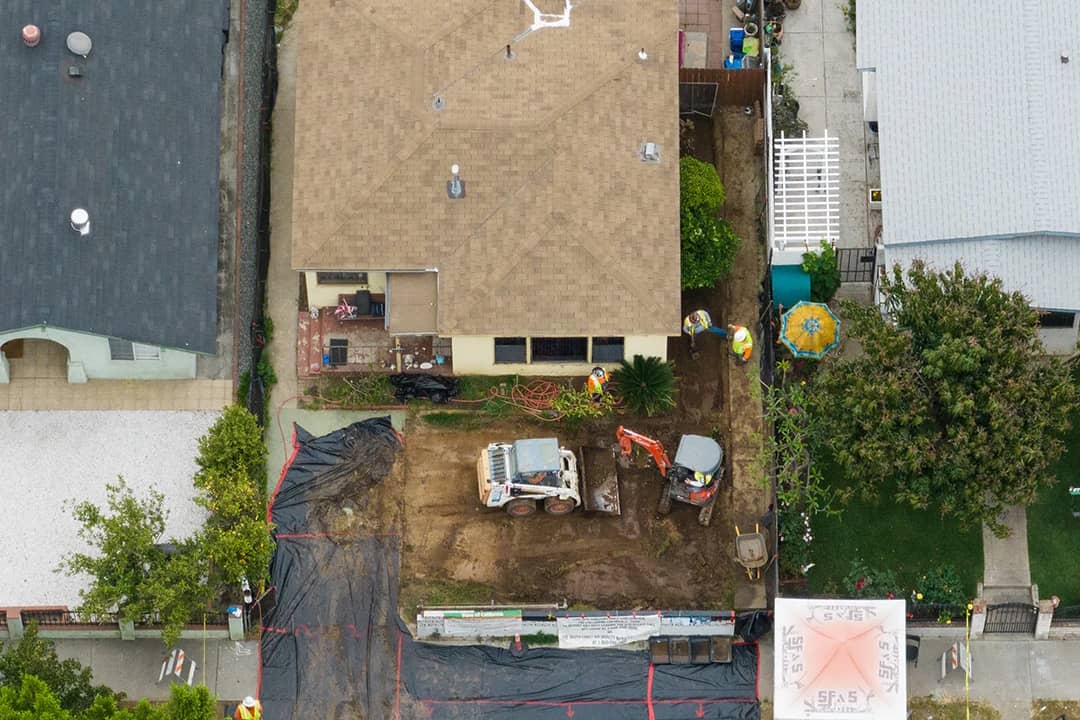

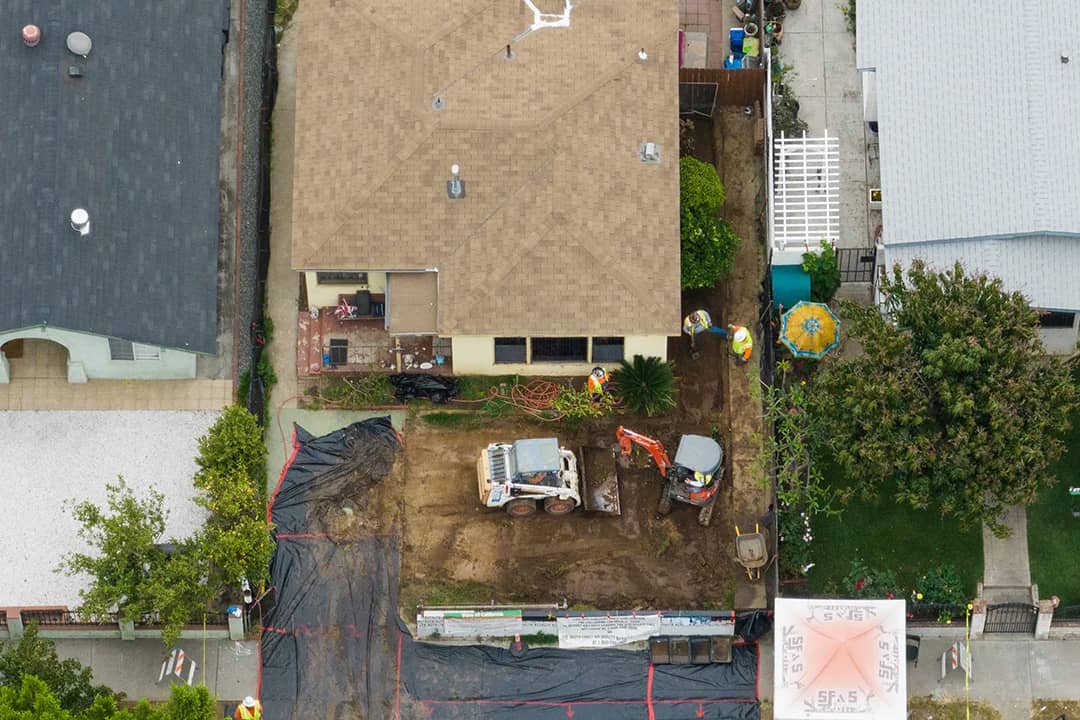
Myung J. Chun // Los Angeles Times via Getty Images
State agrees to retest for lead at homes near Exide where cleanups failed
Since 1986, Karen Noga has lived within 2 miles of the Exide battery smelter, which belched lead and arsenic unabated into surrounding neighborhoods until it shuttered in 2015.
First, Noga lived in Huntington Park, about 1.5 miles away from the plant, she told The Economic Hardship Reporting Project and LA Public Press for this article. Then, in 2002, when the Los Angeles Unified School District claimed her house through eminent domain, Noga bought a home in Boyle Heights, where she lives today.
The Boyle Heights property is within a 1.7-mile radius of Exide, which the state Department of Toxic Substances Control identified as the zone most impacted by lead contamination spewed by the battery recycler.
Noga was 50 years old when, in 2009, she was diagnosed with Stage 2 uterine cancer.
She said she didn’t consider the cancer might have been caused by lead exposure until around 2013, when state officials began sampling soil in residential neighborhoods and discussing cleanup efforts in advance of Exide’s closure. That effort would become the largest environmental cleanup of residential properties in California history. The job has been imperfect, and it’s far from finished.
“We live in an area where people are dying of cancer,” Noga said.
Lead is a toxic chemical that even at low levels can damage internal organs and the reproductive system. But there are no studies on the rates of cancer near the Exide plant, and according to Dr. Howard Hu, a professor of preventive medicine at USC who spoke with The Economic Hardship Reporting Project and LA Public Press, the connection between lead exposure and uterine cancer has also not been studied very much.
But since at least 2023, state officials have known that hundreds of properties like Noga’s still contained high levels of lead — even after they had been “cleaned.”
For the first time, the state is agreeing to retest hundreds of those properties, including, possibly, Noga’s.
It’s a small victory for Noga and other residents, largely of working-class Latino neighborhoods, who have implored the state to retest the soil, conduct effective remediations, and consider alternative methods to sequester the lead.
When the state first tested soil at Noga’s property in 2016, one of 11 samples came back as high as 491 parts per million (ppm). The state’s “level of concern” for lead in soil around Exide is 80 ppm. With such high levels of lead, Noga’s property made the state’s cleanup priority list.
The state’s 80 ppm level is lower than the federal screening threshold of 200 ppm and is designed to protect pregnant people, fetuses, and children, who are the most vulnerable to lead poisoning.
‘I thought the garden was clean’
In 2021, Irvine-based National Engineering and Consulting, Inc., a private contractor hired by the state, completed remediation of Amalia Ordorica’s property in Boyle Heights, where earlier testing had found lead concentrations in the soil as high as 260 ppm.
NEC, after declaring its work finished in 2021, found lead toxicity measurements of 166 ppm in soil 9 inches below the ground’s surface, where Ordorica grows food and her child plays. In its letter of completion to the state, the contractor said its crews did not dig deeper to maintain the integrity of a fence.
But Ordorica said she was never informed about the letter or the results of the tests after remediation was finished. Contacted on Feb. 9 by LA Public Press, she said the findings were upsetting.
Ordorica said her 1-year-old plays with soil and volcanic rocks from the garden. She said she cooks with rosemary and basil that grow on the plot, but plans to stop using them. Now she plans to take her son to have a blood lead test.
“I thought the garden was clean, because they did the cleanup. I thought everything was clean. This is disappointing,” said Ordorica.
NEC did not return requests for comment.
State officials acknowledge that cleanups faltered
Exposure to even low levels of lead carries health risks for everyone, especially children. And because the heavy metal can’t break down or biodegrade in the environment, removal is critical.
Lead can enter the body when it’s inhaled, consumed, or more rarely, touched. Once inside the body, it moves from the lungs or digestive tract into the bloodstream, where it passes to soft tissues, including the brain, kidneys, liver, and muscles. It also integrates into bones and teeth, where with repeated exposure, it can build up over a lifetime.
The health consequences of lead exposure are wide-ranging and widely proven, from behavioral problems to kidney damage to high blood pressure to miscarriage to weakness in fingers, wrists, or ankles.
The link between lead and cancer is less widely agreed upon. In California, lead and lead compounds are listed on Proposition 65 because the state says, definitely, that they can cause cancer. The EPA, however, has identified lead as a “possible” carcinogen.
Hu, the professor of preventive medicine, said it’s “plausible” that lead can cause uterine cancer.
“What is known is that lead can serve as a tumor enhancer, and it can induce DNA damage. But there is no direct evidence of lead causing uterus cancer, as far as I know,” he said. “There is more evidence that lead has an association with urinary tract cancers.”
Hu said that if any people did get cancer from lead exposure generated by Exide, it was likely through the inhalation of fumes while the plant operated from 1922 through 2015.
In 2013 and 2014, California ordered Exide to upgrade the plant’s air pollution system to control arsenic and lead emissions, and the South Coast Air Quality Management District placed 52 violation notices on the site from August 2012 through May 2015.
In 2019, Noga’s property was remediated and immediately retested by NEC. But even after removing 48 tons of contaminated soil from her property and replacing it with clean soil, the contractor’s letter of completion certified lead levels around her home still tested in the range of 104 and 240 ppm.
In 2023, the Los Angeles Times reported that at least 559 state-led cleanups conducted since 2017 around Exide were unsuccessful at totally removing contaminated soil. Those cleanups faltered largely due to underground obstacles, like tree roots and utility lines, that limited digging.
In a typical Exide cleanup, contractors excavate soil at depths of 6 inches at a time, until reaching depths of 18 inches; they then backfill the excavated areas with clean soil.
Noga said she herself asked the site supervisor overseeing the remediation at her property to avoid digging up the soil in her rose bed, which she feared would have killed her plants.
These limitations have been acknowledged by state officials: “We can’t dig under a house, we can’t dig under a sidewalk. We cannot dig under trees that are older than, believe it or not, the people who bought these homes,” Mehdi Bettahar, a program manager with the California Department of Toxic Substances Control, said at a public hearing in February.
In previous public meetings, Steven Hariri, a supervising engineer with the Department of Toxic Substances Control, told residents that many property cleanups have not met the state’s goals.
In the last year, Hariri said the department has already re-sampled 100 lots that it previously treated. Hariri said the state plans to retest lead on up to 1,375 more properties that have already been cleaned. He did not provide a timeline to retest those properties.
The state also has not allocated any funding to re-clean properties where remediation failed.
“As far as the subsequent action to be taken, we have to analyze what data shows, and then we can make that determination at that time,” Hariri told residents at the Feb. 12 meeting.
‘Is that dust blowing over now contaminated?’
Residents have long criticized the state’s cleanup plan for its hodgepodge strategy: prioritizing lots above 400 ppm while leaving less polluted lots untreated for years, which can result in dust and runoff from dirty parcels recontaminating cleaned ones.
These concerns prompted a 2023 study conducted by two experts on urban environmental health, in coordination with East Yard Communities for Environmental Justice, an organization that works to revitalize communities in Southeast Los Angeles. The study found that 73 of 93 remediated properties had soil lead levels above 80 ppm.
The investigation, titled Get the Lead Out!, was led by Jill Johnston, professor of population and public health and spatial sciences at USC; Bhavna Shamasunder, professor of urban and environmental policy at Occidental College; and mark! Lopez, a special projects coordinator with East Yard.
Lopez said physical obstacles in the soil, like cisterns, are perceived by residents as “excuses” for the state’s shoddy cleanup efforts. He wants the state to consider second cleanups and alternative methods.
“We were interested in doing this study, initially because we were worried about the approach the state was taking, as far as the patchwork approach,” said Lopez. “They would clean one house and they’d come back three years later and clean the neighbor’s house. The concern is, is that dust blowing over now contaminated?”
Cleanup costs top $770 million in taxpayer funds
The cost to clean up lead-contaminated soil at residential properties around Exide has, as of Feb. 27, cost California taxpayers $772 million.
To date, the state has remediated 6,041 lots in Boyle Heights, East Los Angeles, Commerce, Vernon, Maywood, Huntington Park, and Bell, and dismembered most of the Vernon plant.
The state estimates it will clean 6,505 parcels total with the money it has already budgeted.
In January, Gov. Gavin Newsom proposed another $70 million for Exide residential cleanups in the state’s 2026-27 budget; that would cover the remediation of about 1,000 more lots, with about 2,600 left to clean.
Residents look for other ways to clean their soil
A study conducted from 2022 through 2023 by local arts initiative Prospering Backyards on 13 parcels around Exide concluded that using special zeolites, compost, and mulch in that order, each separated with cardboard, proved effective in sequestering lead in soil. Zeolites are a type of mineral that can act like a sponge in soil, soaking up lead.
“A goal of the project was to record the best ways to absorb lead without removing soil,” said Elena Esparza, a Boyle Heights resident who participated in the study. They also wanted to see how far away toxins fly in the air, Esparza added.
Aaron Celestian, a professor of earth sciences at USC and the study’s lead scientist, said the type of zeolite used in the study, known as sodium clinoptilolite, matters a lot. He dispelled fears that the mineral would release toxins.
Despite the findings, using zeolites to remove lead from dirty soil is not a viable option for the state, according to Elizabeth Leslie-Gassaway, a public information officer with the Department of Toxic Substances Control.
“Recently, we reviewed the use of zeolites and spoke with various vendors about it. We found that using zeolites would not reduce the amount of lead in the soil, it would just transfer the lead onto the zeolite, leaving it in place,” said Leslie-Gassaway. “So the overall lead levels would stay the same.”
Claudia Vazquez, another Boyle Heights resident, said remediation crews decided not to excavate below the canopy of her pomegranate tree to save its roots in 2019. Soil was remediated elsewhere in her property.
Vazquez said her family harvested and enjoyed pomegranates from the tree last year.
“I think a follow-up would be necessary to ensure the quality of the cleanup from the vendor,” said Vazquez.
The Los Angeles County Public Health Department has distributed fliers around Exide telling residents it is safe to eat fruits “after being properly washed” from trees in the lead cleanup area. But it warned residents to avoid consuming root crops or plants grown on lead-contaminated soil.
The public health department has advised residents to use raised beds with clean soil to grow any herbs or food, and state officials have underscored that remediated soil is safe so long as the fresh soil stays in place and buried lead remains unearthed.
Ordorica said she wants the state to retest her garden, conduct an efficient cleanup, and use zeolites, compost, and mulch.
As for Noga, she said her cancer is in remission. She underwent surgery in 2009 to remove the tumor. During treatment, she filed for work disability and collected a portion of her $1,200 weekly pay for several weeks. The surgery and other medical costs were covered by her insurance.
To this day, she undergoes yearly screenings to keep the disease in check.
She agrees with Ordorica about the approach the state should be taking.
“There has to be an alternative method that does not involve tearing up the entire lawn, and does not cost hundreds of millions of dollars,” Noga said. “There should be a more efficient way to treat the underground.”
Co-published by The Economic Hardship Reporting Project and LA Public Press.
This story was produced by The Economic Hardship Reporting Project and reviewed and distributed by Stacker.
