Teresa Lavin’s Rosary guide connects prayer structure with everyday reflection
Just another WordPress site
Press Release Disclaimer: This is a press release distributed through the XPR Media network. It has not been independently verified by our newsroom.
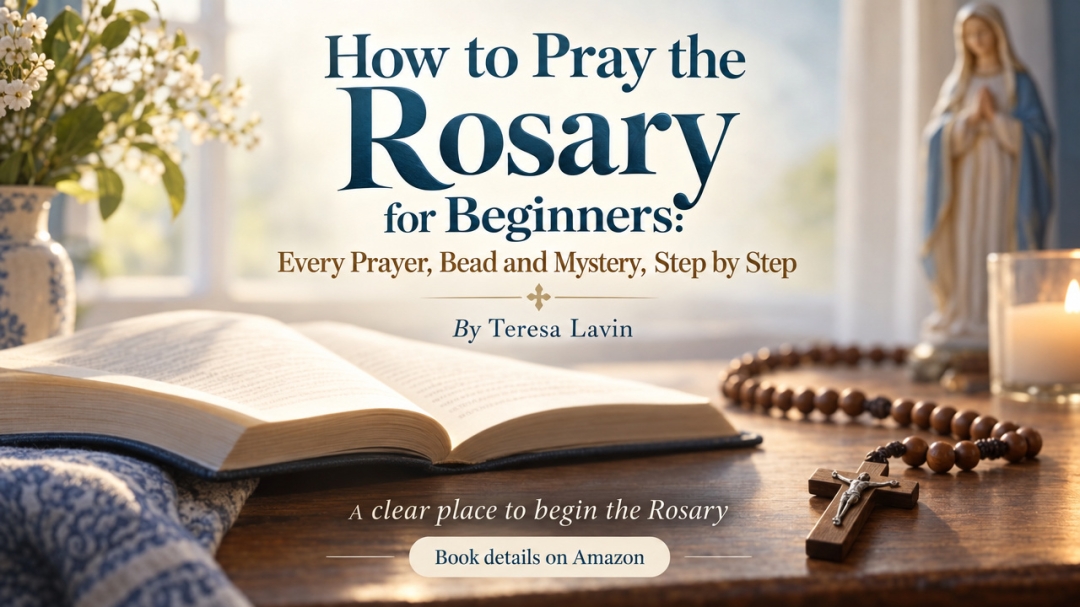

HOUSTON, TX – November 9, 2026 – Teresa Lavin’s How to Pray the Rosary for Beginners: Every Prayer, Bead and Mystery, Step by Step, published November 2, 2026, brings together practical prayer instruction and reflection on how Catholic devotion relates to ordinary responsibilities. The Teresa Lavin rosary book approaches its subject through both structure and meaning: where the prayers belong on the beads, what the mysteries invite readers to consider, and how those reflections can inform choices beyond the time spent praying.
The guide’s distinctive emphasis is the connection between a repeated prayer pattern and attentive meditation. Rather than presenting the mysteries only as names to memorize, Lavin develops them through biblical references, scenes, spiritual fruits and short phrases that readers can retain during prayer. The book covers the Joyful, Luminous, Sorrowful and Glorious Mysteries while making room for questions about language, Catholic teaching and the interruptions that accompany family and working life.
The beads as a practical map
What is a decade in the Catholic Rosary? In the guide’s explanation, a decade centers on ten Hail Marys associated with one mystery, an event in the life of Jesus or Mary. The sequence begins by announcing the mystery and praying an Our Father, continues through the ten Hail Marys, and concludes with a Glory Be. The Fatima Prayer is optional. This gives beginners a repeatable unit of prayer without separating the words from their meditative focus.
Lavin also explains how Rosary beads connect to each prayer. A five-decade rosary has fifty-nine beads: six large beads for the Our Fathers and fifty-three small beads for the Hail Marys. Three small beads belong to the introductory strand, while fifty form the five groups of ten. The opening chapter pays attention to the transition from the short strand into the loop, including the second large bead on the strand, where the first mystery is announced and its Our Father is prayed.
That physical map supports the book’s broader treatment of meaning. Readers can follow the sequence from the Sign of the Cross and Apostles’ Creed through the decades to the Hail Holy Queen and closing prayers. Alongside the prayer texts, explanations address language that may be unfamiliar or unsettling, including references to sin, death and hell. The guide also acknowledges differences in prayer translations and advises readers praying with others to follow the group’s wording.
Mysteries connected to ordinary choices
In the Joyful Mysteries, the Visitation becomes a reflection on love of neighbor. Lavin connects Mary’s visit to Elizabeth with practical expressions of care: encouragement, a meal, a ride or a visit. The meditation does not ask readers to solve another person’s problems during a decade. Instead, it directs attention toward generosity and the possibility of one small action afterward. This is a concrete example of the book’s movement from a biblical scene to daily conduct.
The Nativity receives a similarly practical treatment. Its spiritual fruit, poverty of spirit, is explained as freedom from demands for possessions, status, control or constant comfort—not disregard for ordinary needs or work. In the Luminous Mysteries, the Proclamation of the Kingdom links repentance with concrete change. The discussion names actions such as apologizing, avoiding a temptation or asking for help, while explicitly distinguishing repentance from self-hatred.
The Sorrowful Mysteries extend this approach to difficult experiences without requiring a particular emotional response. Reflection on the Crucifixion allows room for grief, silence, anger or numbness. The book presents perseverance as faithfulness through the next responsibility rather than proof that a person can manage alone. Its discussion of patience also states that seeking medical, emotional, spiritual or practical support is compatible with faith. These passages describe the guide’s pastoral approach without promising that prayer will remove hardship.
Explaining devotion without avoiding questions
The book’s discussion of Marian devotion distinguishes worship from veneration. In Lavin’s account of Catholic teaching, worship belongs to God alone, while Mary is honored because of her relationship to Jesus and her response to God. Marian intercession is explained as asking for prayer, not replacing prayer to God or securing a guaranteed outcome. A dedicated chapter addresses the question of whether Catholics worship Mary, giving readers language for understanding the distinction.
The treatment of the Glorious Mysteries also identifies a distinction beginners may not expect: the Assumption and Coronation are not narrated as Gospel scenes. The guide explains their grounding in Catholic Sacred Tradition and their relationship to Scripture. Appendix A, a scriptural Rosary, offers ten short steps for each mystery, one for each Hail Mary, while noting that the final two Glorious Mysteries draw on that tradition. The steps are presented as optional aids to meditation rather than additional requirements.
Prayer within real responsibilities
Lavin’s practical approach continues in the chapter on the Rosary in everyday life. When childcare, an appointment or another responsibility interrupts prayer, the guide advises attending to the person or duty at hand. Readers who remember where they stopped can resume there; those who do not can make a reasonable estimate. The book also allows for shorter intentions from the outset, such as one decade before bed or a single mystery offered for a particular need.
Written for newcomers, returning practitioners, people attending OCIA and readers curious about a Catholic family member’s prayer, the guide offers several entry points into the same subject. Readers may begin with the sequence, consult the prayer texts or explore the mysteries. Across those routes, its focus remains the relationship between spoken prayer, meditation and daily action. Further information about How to Pray the Rosary for Beginners: Every Prayer, Bead and Mystery, Step by Step is available at https://www.amazon.com/dp/B0HQ2B4XTP. Additional book information is available through Book website.
Readers can explore related background through A Catholic prayer companion.
About Teresa Lavin
Teresa Lavin is the author of How to Pray the Rosary for Beginners: Every Prayer, Bead and Mystery, Step by Step. Her guide addresses the Rosary’s prayer sequence, bead structure, mysteries and place in everyday Catholic devotion. Written for newcomers, returning practitioners and readers exploring Catholic prayer, the book combines practical instruction with explanations of Marian intercession, prayer language and meditation.
Media Contact
Company Name: How to Pray the Rosary for Beginners
Contact Person: Teresa Lavin
Email: Send Email
Phone: 713-392-6222
Address:450 N Sam Houston Prky E Ste 103
City: Houston
State: TX
Country: United States
Website: https://jp6g3hlb5thqg8weo6dmb44y.macaly.app
Press Release Distributed by ABNewswire.com
To view the original version on ABNewswire visit: Teresa Lavin’s Rosary guide connects prayer structure with everyday reflection