Keeping up appearances at the National Parks
RE:PUBLIC reports Yosemite National Park faces overcrowding issues despite NPS claims of improved visitor management,
Press Release Disclaimer: This is a press release distributed through the XPR Media network. It has not been independently verified by our newsroom.
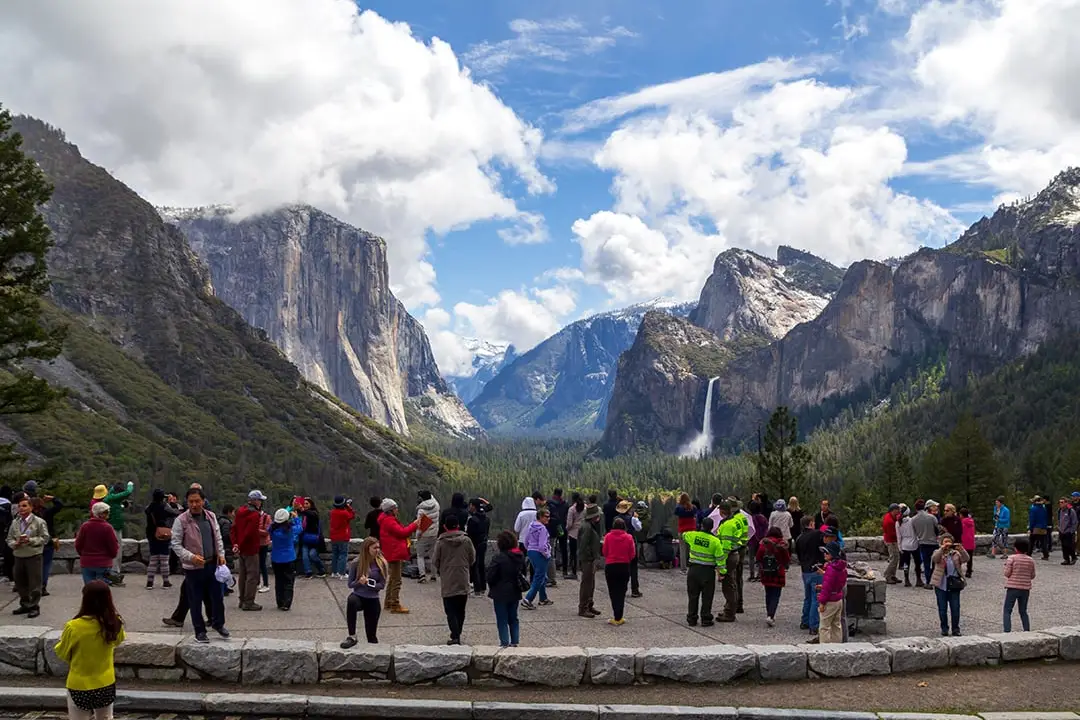

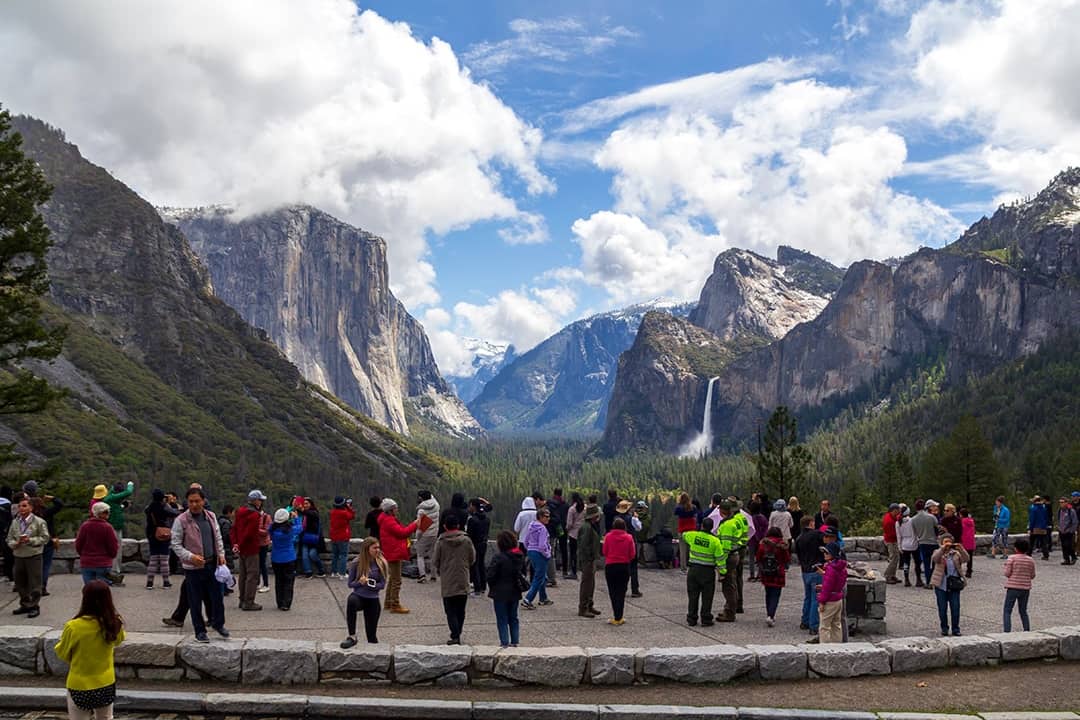
Jordi C // Shutterstock
Keeping up appearances at the National Parks
On Aug. 10, the Facebook account for Yosemite National Park posted an item labeled “The numbers are in!” It contained a brief list of statistics related to Yosemite’s 2026 visitor experience, and the takeaway was clear: Things couldn’t be going better at one of the nation’s most famous and popular natural wonders.
“Entrance lines move faster than ever with entrance waits under 15 minutes most of the time,” the post said. How about parking? No problem. “Sufficient parking is available Sunday through Friday in all areas of the park. … All parking in Yosemite has not filled any day this year.”
Public comments below this ranged from gratitude for a job well done—“I’m in the Park weekly and this is true. The Park is running smoothly.”—to frequent and intense skepticism, with one person asking, “Is this April 1st?”
“This reads like a fairy tale,” said a commenter who visited this summer. “Parking spaces in Curry Village were filling up by 7:30am when we hiked Vernal and Nevada Falls. Traffic was backed up for miles on Northside Drive coming into the park.” (Northside Drive runs north of the Merced River and leads to popular destinations like the Yosemite Valley Loop Trail and the Yosemite Valley Lodge.)
“Been there during the reservation period and also went a few weekends ago,” another recent visitor said. “[T]hat math ain’t mathing. The experience with [the] reservation system was much more enjoyable for EVERYONE, including wildlife and environment, I’m sure.”
Yosemite’s reservation system was introduced in 2020 to help ease a visitation crush during the COVID-19 pandemic, and it was the partial focus of a Biden administration strategy document released in August 2024 called “Visitor Access Management Draft Plan and Environmental Assessment.”
That framework, produced by the National Park Service (NPS), cited a range of longstanding problems that needed to be addressed going forward, including overcrowding at parking lots; road congestion that can interfere with emergency vehicle access; and “concentrated visitor use that has an increasing impact on natural and cultural resources”—such as crowded hiking trails that might inspire people to damage the landscape by hoofing it into woods or meadows.
A reservation system was periodically used at Yosemite until February of this year, when the Trump administration scrapped it, returning to a policy that requires no advance booking before visitors roll in. Since then, various interested parties—the media, nonprofit groups like the National Parks Conservation Association (NPCA), former Park Service officials, politicians, and private citizens—have documented what appear to be serious congestion-related problems.
The New York Times put it bluntly in a July 5 report: “Yosemite Offers Many Wonders. Crushing Crowds Are Now One of Them.” On July 7, The Fresno Bee reported that the park had experienced “massive gridlock, wildlife and safety concerns, and calls from two California senators to bring the system back.” On July 10, SFGATE said Yosemite had recorded 634,508 total visits in June, the most for that month since 2016—the 100th anniversary of the NPS—and that cracks were definitely showing.
“People who work closely with the park say the crowding is impossible to miss,” the story said. “There are more vehicles than there are parking spots on the weekend, resulting in people parking unsafely on the side of roads. At least one fight over a parking spot reportedly required ranger intervention.”
“Yosemite has been a complete mess this summer,” says Mark Rose, the Sierra Nevada and clean air senior program manager for the NPCA. “There are so many visitors that they’re not even trying to prevent illegal parking—people are just pulling off wherever they can. They don’t have the staffing to even enforce their own traffic laws.”
Cassidy Jones, a former park ranger who now serves as senior visitation program manager for the NPCA, says that, by abruptly ending this system, the NPS jettisoned an idea that had been working—even as it required the public to adapt to a challenging new way of doing things.
“We are asking people to do something very different when we ask them to make a reservation to visit a national park,” she says. “But people were getting used to it. All of a sudden, we’ve returned to the chaos and definitely diminished visitor experiences.”
RE:PUBLIC requested an interview with any available Yosemite official to discuss the gap between the park’s statements and credible reports about overcrowding. The U.S. Department of the Interior’s communications office responded by saying the media got everything wrong.
“Yosemite National Park has repeatedly provided reporters with accurate information about conditions in the park,” the office said in an email. “Some news outlets chose to publish accounts that ignored or contradicted those facts. Repeating those reports does not make them accurate, nor does their existence call into question factual information published by the National Park Service.”
The NPS oversees 433 units, including 63 national parks and 87 national monuments, along with a host of places covered by 17 other “naming designations” that may not be as familiar to the general public, including National Parkways, National Scenic Trails, and National Rivers.
Few sites experience as much pressure as Yosemite, and it would be unfair to say that chaos has been the norm all over the system this year—though similar congestion has occurred in the spring and summer at Arches and Glacier national parks, both of which were using reservation systems that the Trump administration stopped. Zion, which is perpetually crowded, does not use such a system. Only Rocky Mountain National Park still employs one; according to a recent report by Colorado Public Radio, it has continued to work well.
“It helps us promote safety by spreading people out throughout the park and throughout the day,” a park spokesperson told CPR. “It helps us protect park resources and supports the park’s ability to maintain … our operational capacity, our existing roads, our existing trails, our bathroom facilities.”
Meanwhile, three thousand miles away from Yosemite, Maine’s Acadia National Park—which doesn’t use a park-wide reservation system—appears to have had a relatively routine season so far, despite experiencing the kinds of staffing cutbacks that have been felt throughout the NPS system over the past two years. During the Trump administration, Acadia has lost around 60 members of a permanent staff that has usually totaled 150.
“If you are visiting Acadia this summer, you wouldn’t notice that the park is understaffed,” says Todd Martin, northeast senior program manager for the NPCA. “The Park Service is really prioritizing putting staffers on the front lines in visitor-facing roles. So I think it’s hard for the average person to see the impacts of staffing challenges.”
Martin touches on something that came up consistently during conversations with park experts: Staffing reductions have been dramatic, but their impact is not always visible.
The NPCA estimates that, since January 2025, the NPS has shed nearly a quarter of its permanent workforce—roughly 4,000 positions—a number driven by factors that include mass terminations and early retirements. In a blog post from May of this year called “Culture of Fear,” the NPCA’s director of communications, Angela Gonzales, pointed out a subtlety that’s easy to miss when visiting an NPS site these days, especially during an influx of seasonal employees who are estimated by the NPCA to number roughly 8,100.
“Visitors may notice longer lines, fewer ranger programs and shuttered facilities,” she wrote, “but the deeper impact behind the scenes is harder to see, including fewer experts available to protect wildlife, preserve sacred sites, facilitate repair projects, and ensure timely communication with the public about evolving and potentially dangerous situations in parks.”
Jones raises a similar point. “In the context of the important goals of protecting resources, running a super-crowded and congested park is just a nightmare, because you may not be doing your job as a ranger,” she says. “Instead you’re wearing an orange vest and helping people not get into fistfights over scant parking places.”
“Reductions of staff since the beginning of this administration have placed a lot of pressure on current staff,” says Charles F. Sams III, the director of the National Park Service during the Biden administration and the first Native American to hold that office. “Staff that traditionally work back-of-the-house, doing administrative operations, are now on the more public side of things.”
“In 2016, the birthday of the National Park Service, Yosemite had a thousand permanent employees,” says Don Neubacher, the park’s superintendent from 2010 to 2016. “They’re now down to 850.”
The daily demands of resource protection are a fundamental part of the NPS mission. In the agency’s own words, it is “dedicated to conserving unimpaired” the system’s “natural and cultural resources and values … for the enjoyment, education, and inspiration of this and future generations.”
Colin Deverell, regional director of the NPCA’s northwest regional office, agrees that the NPS is now following a visitors-first management policy that short-changes other areas, including science, wildlife management, and the protection of natural resources and cultural artifacts. As an example, he points to Olympic National Park, an NPS crown jewel that consists of 1,400 square miles on Washington State’s Olympic Peninsula.
“Around 98 percent of Olympic is wilderness, and it’s a really critical recovery place for Pacific salmon,” he says. “Pacific salmon aren’t just critical for ecology, but for tribal communities that have relied on that resource since time immemorial, and the salmon are increasingly threatened.”
Deverell says the park’s fisheries management program, which oversees some of the Pacific Northwest’s most important salmon runs, had nine staff members during its peak. These days, Deverell says, they’re down to a pair of interns and one permanent staffer.
Staffing in the wake of the major cuts that have occurred is a persistent concern. On Aug. 17, the Resistance Rangers—an advocacy group made up mainly of former and off-duty rangers—sent an open letter to members of Congress arguing that the NPS is intentionally slow-walking the process of filling permanent positions.
“National Park Service hiring isn’t frozen anymore, but it might as well be,” they wrote. “Approvals now move so slowly, it’s like hiring is stuck in tar.” According to the letter, DOI instituted a new hiring-approval structure this spring that took away the ability of park superintendents and regional offices to make their own hiring decisions. For some jobs, filling a position now has to be approved at the top level at Interior.
“When a hiring official knows that filling a position requires sign-off from the Secretary of the Interior, they stop asking for critical roles like biologists, archaeologists, educators, communicators, and wilderness and compliance specialists,” the letter says, “If they do ask, it takes months to hear back—if they hear back at all—and the answer is often ‘no.’”
“Most hiring currently being done is focused on emptying trash cans, cleaning bathrooms, traffic control—the things that make it look like the park is functioning normally,” says Mark Rose. “We’ve been calling it ‘facade management.’ Behind the scenes, many of the important things that are needed to keep a park protected in the long run—including the science and wildlife monitoring—are not happening adequately.”
In Project 2025, the policy blueprint compiled in advance of Trump’s second term by the Heritage Foundation and other conservative groups, national parks barely come up, so it’s been anybody’s guess as to what the administration’s long-term goals are for the system.
“They don’t even mention them,” says Jonathan Jarvis, who served as director of the National Park Service under President Obama. “I think that what’s basically driven policy is an ideology that the parks are just tourist attractions. That’s all they are, and we’re going to manage them like that—cramming as many visitors in there as possible.”
If that’s the model, what’s happened this summer—prioritizing the appearance of business-as-usual by having both permanent staff and seasonal employees focus on visitor needs—could be the plan for the rest of this administration. Though it’s debatable whether that counts as a plan.
“This is kind of their model,” Jarvis says. “Let’s disrupt something, and then we’ll figure out what’s left and how to rebuild it.”
This story was produced by RE:PUBLIC and reviewed and distributed by Stacker.