Choice Collision Centers Explains What Happens During Vehicle Disassembly After a Collision
Providence, RI - September 15, 2026 - PRESSADVANTAGE - Choice Collision Centers has published consumer guidance focused
Press Release Disclaimer: This is a press release distributed through the XPR Media network. It has not been independently verified by our newsroom.

Providence, RI – September 15, 2026 – PRESSADVANTAGE –
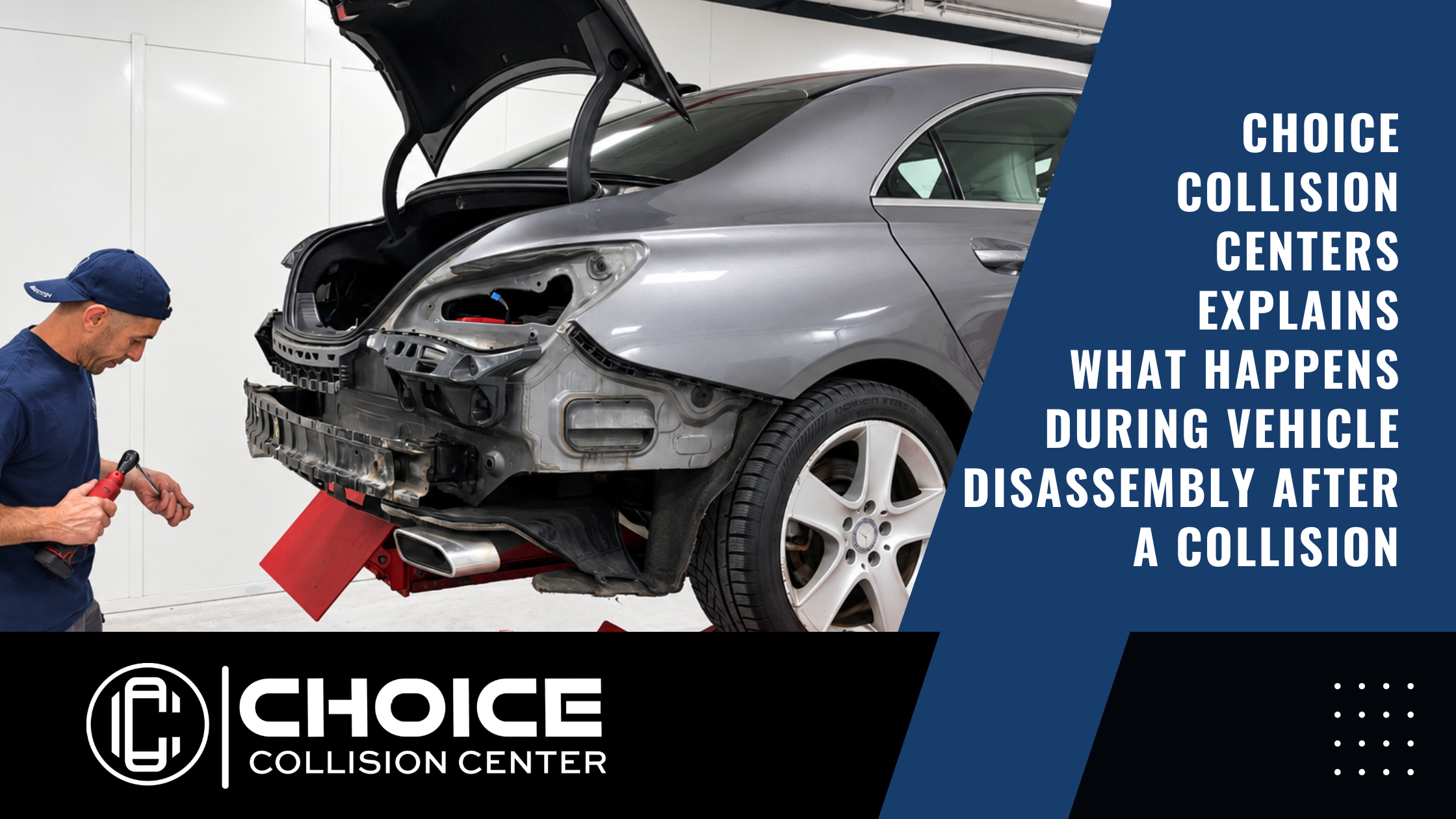
Choice Collision Centers has published consumer guidance focused specifically on vehicle disassembly, the stage of collision repair in which selected components are removed to provide access to areas that could not be fully evaluated during the initial inspection. The resource explains how information gathered during this stage can affect damage documentation, parts identification, manufacturer procedure research, and the developed repair plan.
The publication adds a disassembly-specific explanation to Choice Collision Centers’ full collision repair information. Its primary addition is a concise progression showing consumers how a repair can move from visible damage to component-level findings before major repair operations begin.
Initial inspection establishes the starting point. With the vehicle assembled, technicians can document visible conditions such as dents, cracks, displaced panels, damaged paint, broken lamps, or glass damage. Those observations identify the collision area but may not provide access to every component associated with it.
Bumper covers, exterior panels, liners, and trim can restrict visibility of mounting points and adjoining components. When the collision area requires further access, selected parts can be removed so technicians can evaluate what is behind them.
A damaged bumper illustrates the difference between the two stages. Exterior inspection may establish that the bumper cover is cracked or displaced. Once appropriate access is created, technicians can inspect the brackets, mounting locations, reinforcement components, wiring, and other parts associated with that area.
The resulting findings provide a more complete record of the repair area. Additional accident-related damage may be identified, or inspection may establish that previously covered components were not affected. Disassembly therefore provides evidence for the repair plan rather than assuming that concealed damage exists.
This component-level assessment can also clarify why an initial estimate and a developed repair plan may differ. The initial estimate reflects information reasonably available before further access is created. Findings documented later can add repair operations or component information that could not be established from the exterior.
Choice Collision Centers provides additional information about subsequent body and panel work through its auto body repair resource.
Component identification is another focus of the new guidance. Vehicles can incorporate steel, high-strength steels, aluminum, plastics, composites, and other materials. Parts can also use different attachment methods, including bolts, clips, welds, rivets, and adhesives.
Once the relevant components are accessible and identified, technicians can research information applicable to the individual vehicle and repair operation. Manufacturer procedures may address whether a component can be repaired, when replacement is specified, joining methods, measurements, corrosion protection, inspections, diagnostics, or other technical requirements.
Disassembly can also clarify the location of electronic equipment within the collision area. Cameras, parking sensors, radar-related components, wiring, and other electronics may be installed in or behind exterior parts.
Identifying this equipment helps establish which systems are associated with the repair area. It does not mean that every exposed electronic component is damaged or that calibration is automatically necessary. Those determinations depend on the vehicle, documented conditions, and applicable procedures for the work being performed.
The resource also connects disassembly with parts planning. Once technicians can directly evaluate the repair area, they can identify components that require repair, replacement, removal and reinstallation, or additional inspection. That information can be incorporated into the repair sequence before the corresponding work proceeds.
When insurance is involved, newly documented accident-related conditions may also become part of supplemental repair documentation. Photographs, component information, and applicable procedures can provide supporting information when the repair plan changes after the initial assessment.
The September publication differs from Choice Collision Centers’ broader collision repair information by concentrating on this transition between initial inspection and developed repair planning. Rather than describing the complete repair process, it explains what technicians are seeking to establish during disassembly and how those findings influence the next stage of the repair.
For consumers, the process can be understood as a short sequence. Initial observations identify the affected area. Appropriate component removal creates access. Inspection establishes the condition of previously covered areas. Component identification and vehicle-specific research then provide information used to develop the repair plan.
The resource also makes an important distinction between disassembly and extensive dismantling. The amount of access required depends on the individual collision and affected area. The purpose is to expose components relevant to the documented damage so their condition can be evaluated.
Additional information about the company’s local repair services is available through the Providence location resource.
The central point of the new publication is that vehicle disassembly serves as a bridge between what can initially be observed and what can be documented at the component level. By creating appropriate access before major repairs proceed, technicians can use direct findings to support parts decisions, procedure research, and the developed repair plan.
Choice Collision Centers is a locally owned and operated collision repair company established in 1997. The company provides collision repair and auto body repair services in Rhode Island and Massachusetts. Its Providence facility is located at 125 Ernest St, Providence, RI.
###
For more information about Choice Collision Center, contact the company here:
Choice Collision Center (Providence)
Steve Melo
(401) 245-0213
information@choicecollisioncenters.com
125 Ernest St, Providence, RI 02905